
Last week we presented some of the work of Horrace Esselstyn – this talented and sought-after engineer worked on some incredible projects across Metro Detroit and some stunning homes in Grosse Pointe during the 1920’s.
This week we head to 39 Beverly Road, a lovely English Cottage style home that Horrace Esselstyn created with his partner of six years, architect Raymond Carey.
In September 1923 it was announced in the Detroit Free Press that Horrace Esselstyn had formed a practice with distinguished architect Raymond Carey. Carey & Esselstyn worked together from 1923 to 1929. Much of their work was in the prestigious neighborhoods of Metro Detroit, including Grosse Pointe, where they designed at least 4 homes
- 867 Balfour - 1923
- 1104 Nottingham – 1926
- 39 Beverly - 1927
- 338 Provencal - 1928
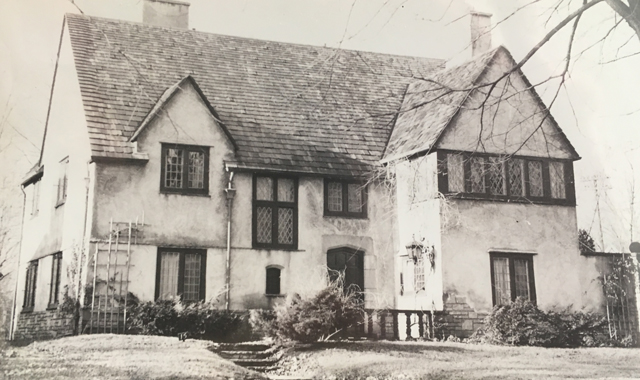
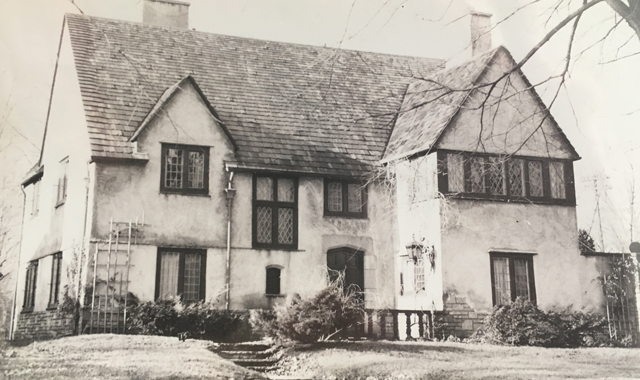
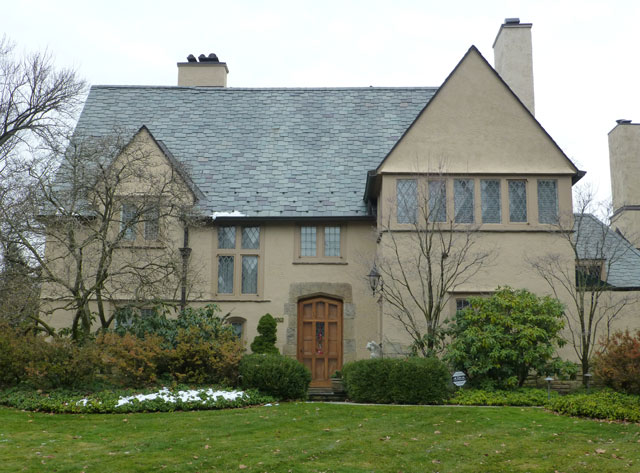
39 Beverly was completed in 1927 for lawyer William H. Wells and his wife. The two-story 3,511 sq ft property is an English Cottage style home, displaying many typical characteristics associated with this approach – a steeply pitched slate roof, an oversized chimney, multiple small windows, a gable roof, and an asymmetric configuration. It is constructed from stone with a stucco exterior with the front elevation displaying an attractive band of leaded windows on the second floor. The garage is attached to the house.
It is understood Mr. Wells added an addition to the home in 1929. However, the Wells family did not live in their new home for long since it was leased to Lee Anderson from 1929-1935. Mr. Anderson was president of Advertisers, Inc., a company that dissolved at his retirement. Anderson was also a sportswriter for the Detroit News (between 1903-09), then advertising manager for Chalmers Motor Company (from 1910 until 1928), following which he formed his own advertising company. It is understood Mr. Anderson was known for originating the slogan, "Body by Fisher."
In 1936 it appears 39 Beverly went through foreclosure (it is not clear who owned it at that time), and the house was subsequently purchased by Mr. and Mrs. William Rust Pierce (Henrietta Warnick Kernan). It was reported Mrs. Pierce was the founder of Walton Pierce, a couture shop in Detroit in the 1930's and 1940's that moved to Grosse Pointe around 1950. It is alleged it was the only dress shop on the east side of Detroit that brought out its own collections twice a year. The house remained with the Pierce family until 1983.
Horrace Esselstyn’s partner, Raymond Marwood-Elton Carey, was born in Guernsey, Channel Islands (United Kingdom) on 27 August 1883. He was educated in Bath but by 1901 he had relocated to London where he spent many years working for several prestigious architects. It is reported, in documents from the Royal Institute of British Architects in London, “Carey possessed impeccable professional credentials which he obtained during his residency with us.” We also leaned “in 1901-03, he was associated with none other than Charles F.A. Voysey, the acknowledged master of the Arts & Crafts style in England. From 1903-05 he continued his training under the prominent architect Leonard A.S. Stokes and remained with him as a draftsman until 1907. Carey then traveled in Italy for a full year, returning to London in 1909.” Source: dictionaryofarchitectsincanada.org.
In 1909, Carey relocated to Winnipeg, Canada. Aged 26 it is reported he arrived armed with an “extensive knowledge of contemporary design trends from England, and a wealth of experience,” having been surround by some of the finest Georgian residences in the world. This level of experience and inspiration influenced much of Carey’s career, particularly many of the homes he would eventually work on in Grosse Pointe. However, it is alleged that while Carey was highly regarded in Michigan, he was “an underrated figure in the architectural history of Winnipeg.” Source: dictionaryofarchitectsincanada.org
Carey worked in Winnipeg for several years as a draftsman, then went to San Francisco, before returning to Winnipeg to open an office in early 1911. During this time, he formed a partnership with John Woodman. Together they designed several significant commercial and industrial buildings, along with several splendid residences. It is reported “Carey introduced a new and elegant repertoire of architectural design and detail to the Winnipeg scene.” Source: dictionaryofarchitectsincanada.org. By 1917, Carey had ceased working with John Woodman and had formed a partnership with George W. Northwood to form the firm of Northwood & Carey.
Around 1922, Carey relocated to Detroit to continue his career. He initially operated under his own name, but by 1923, had formed a partnership with engineer Horace Esselstyn. It was during this period that Carey “produced some of the most distinctive and sumptuous residential masterpieces of his career.” Much of his work was in the prestigious neighborhoods of Metro Detroit, particularly Grosse Pointe Farms. It is acknowledged he designed more than 15 homes in the community, most of which were in his signature Georgian and Tudor Revival styles. Click here to read more here.
39 Beverly is one of the prestigious residences that was constructed between 1911 and 1936 on this private street for prominent corporate executives and lawyers who sought to live in the affluent neighborhood of Grosse Pointe Farms. Beverly Road is the only road in the Grosse Pointe communities that is listed on the National Register of Historic Places. The district was one of the earliest upper-class subdivisions in the Grosse Pointes and played a major role in the area becoming an upscale community for wealthy Detroiters.
* Photos courtesy of the Higbie Maxon Agney archives unless stated.
** Research, information, and data sources are deemed reliable, but accuracy cannot be fully guaranteed.
Written by Katie Doelle
Copyright © 2026 Higbie Maxon Agney & Katie Doelle
Posted by Kay Agney on
Enjoy this blog post? Click here to subscribe for updates
Leave A Comment