
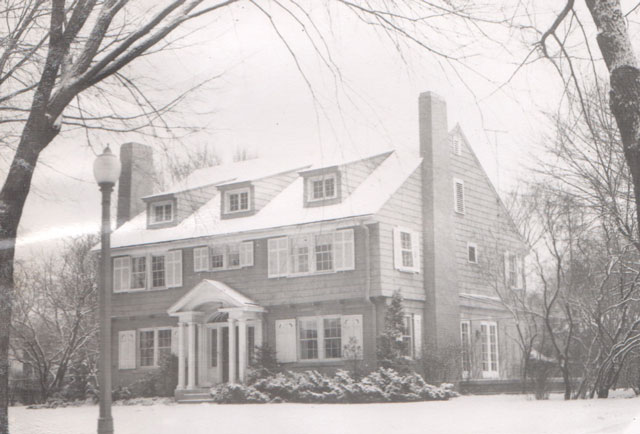
Last week we presented four homes that were designed and built by the talented duo of Raymond Carey and his partner, Horrace Esselstyn, between 1923 – 1929. Together Carey and Esselstyn created many fine residences along with several key buildings in Detroit.
This week we continue with the work of Horrace Esselstyn as we explore more of his creations and career history – this talented engineer worked on some incredible projects in Grosse Pointe and across Metro Detroit.
A successful engineer, Horace Hovey Esselstyn was described as an “outspoken” and “colorful figure” who “played a large part in building modern Detroit.” He was born in Detroit on 26 December 1874. A couple of years later the family decided to move back to Syracuse, New York where they were originally from. His father was a successful photographer and reopened his studio in the city. In 1898, aged 14, it is understood Esselstyn briefly joined the US Army during the Spanish-American War, however with the war nearly over he was discharged only a month later. Having graduated as an engineer he moved to Puerto Rico to build highways, this was followed by time working in Japan. In 1904, he married Clara Gillespie. They initially lived in Washington, D.C. but by 1909, they had moved back to Detroit to continue his career. Aside from being hired to build residences he also “helped to design many of Detroit’s big buildings, including several erected by the Detroit Edison Co., and supervised construction on the Belle Isle and Ambassador bridges. Other major projects he worked on was the role he played in the electrification of the Grand Rapids, Grand Haven and Muskegon Railways, and the Great Falls & Old Dominion Railway.” Source: Detroit Free Press (January 1958). It was also reported during World War I the government made him supervisor of construction for the Hog Island Shipyard near Philadelphia.
Aside from being a highly sought-after engineer Esselstyn was involved in public service, serving as Detroit Commissioner of Public Works for a year in 1918 and later serving as Commissioner of Street Railways. He also ran unsuccessfully for mayor of Detroit in 1927.” Source: wikitree.com
After World War I Esselstyn was partnered with Murphy & Hanford. It was during this time the firm created several homes on Rivard, including
497 Rivard - 1918
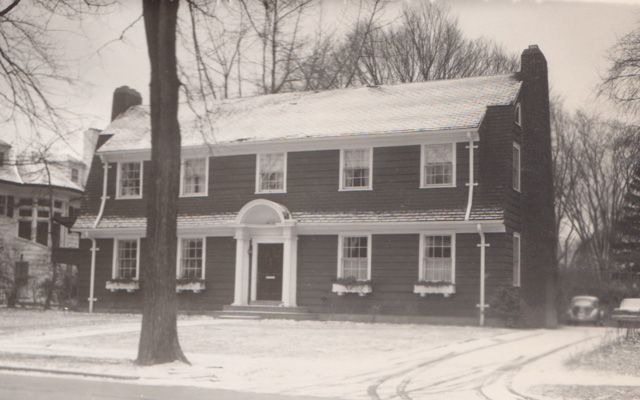
487 Rivard – 1919
This center entrance clapboard Colonial home was arguably Esselstyn’s most noted residence. It was commissioned by Bernard Stroh Jr. (of the Stroh Brewery Company). The 6,299 sq ft home is exquisite with wonderful interior features, including a stunning entrance hall, high ceilings, one of the best examples of a flying staircases in Grosse Pointe, along with beautiful Pewabic and ceramic tile throughout. You can read the full story by clicking here.
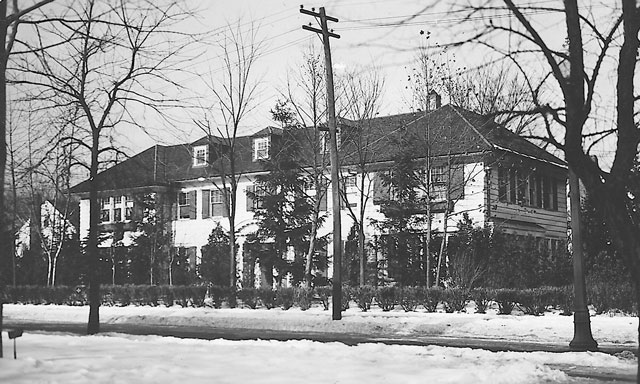
502 Rivard – 1919
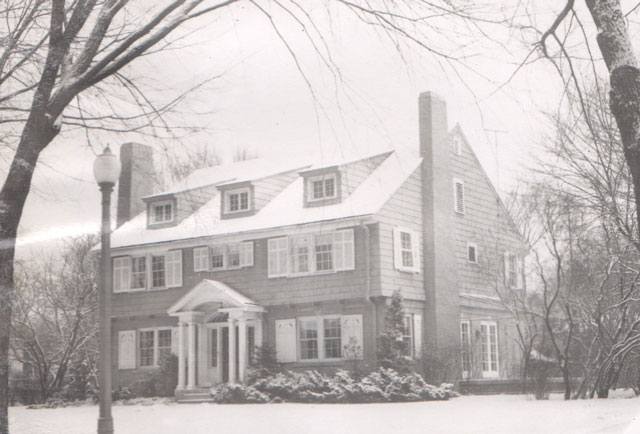
By 1922 the firm of Esselstyn, Murphy & Hanford had become Esselstyn, Murphy & Burns. One of the finest homes they created was 329 Grosse Pointe Blvd, built in 1922. It is a beautiful Italian styled home with superb architectural details on the front elevation. The design features an abundance of arches - on the entranceway, above the first-floor windows, and delicate brick detailing on the chimneys.
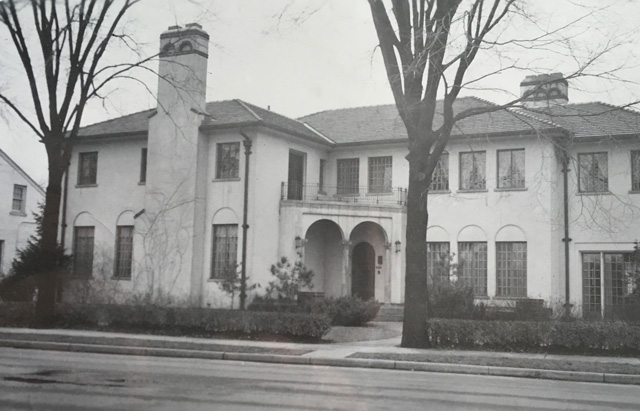
In September 1923 it was announced in the Detroit Free Press that Esselstyn had formed a practice with distinguished architect Raymond Carey. Carey & Esselstyn worked together from 1923 to 1929. It was during this period that Carey “produced some of the most distinctive and sumptuous residential masterpieces of his career.” Much of their work was in the prestigious neighborhoods of Metro Detroit, including Grosse Pointe, where they designed at least 4 homes
- 867 Balfour - 1923
- 1104 Nottingham – 1926
- 39 Beverly - 1927
- 338 Provencal - 1928
Aside from residences, it is understood Carey & Esselstyn are credited with working on several key projects in Detroit including – (Source: dictionaryofarchitectsincanada.org)
- Gately’s Department Store on Michigan Avenue
- Belle Isle Bridge (1924)
- Detroit Receiving Hospital, Nurse’s Home, and Annex (1924-26)
- Detroit’s Woods Cathedral in Lasalle Gardens (1925)
- Two schools for the City of Detroit
- Fourteenth Precinct-Detroit Police Station, on Coolidge Highway (1926–27)
- A factory for the Mississippi Glass Company
- An office building for the Detroit Automobile Company (owned by Henry Ford)
In 1932, it was reported Horrace Esselstyn moved to San Diego where he held the post of city manager. Upon returning to Michigan (year unknown) he partnered in several engineering firms. He passed on 08 Jan 1958 in Detroit.
The “colorful figure” of Horrace H. Esselstyn played a large part of influencing the architectural scene in Detroit. And here in Grosse Pointe he certainly helped shape some stunning homes.
* Photos courtesy of the Higbie Maxon Agney archives unless stated.
** Research, information, and data sources are deemed reliable, but accuracy cannot be fully guaranteed.
Written by Katie Doelle
Copyright © 2026 Higbie Maxon Agney & Katie Doelle
Posted by Kay Agney on
Enjoy this blog post? Click here to subscribe for updates
Leave A Comment