
Last week we presented the story of Commander Alexander Grant – a British Naval officer serving on the Great Lakes – who moved to Grosse Pointe around 1774. He became the earliest prominent settler and constructed the area's first large permanent residence – “Grants Castle”.
As part of the post, we mentioned two historical figures, Geroge Lothrop and Theadore Hall. Lothrop built a summer cottage, known as “Summerside” on part of the land owned by Alexander Grant, while Theadore Hall purchased “Grants Castle” around 1875, razed it and set about building his own majestic estate, Tonnancour. So, this week we are going to delve deeper into the lives of these two significant men who played a large part in shaping Grosse Pointe into the community we know today.
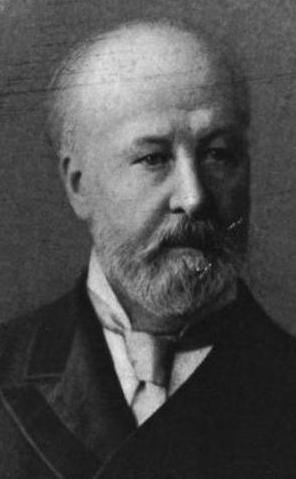
George Van Ness Lothrop served as the seventh Michigan Attorney General from 1848 until 1851 and was the US ambassador to Russia. He was born on 8 August 1817 in Connecticut. Having graduated from Brown University he then started law school at Harvard but didn’t finish due to ill health. It is understood “he moved to live on his brother’s farm in Prairie Ronde, Michigan to recover before moving to Detroit in 1843 to finish his law studies. He married Almira Strong in 1847. Image courtesy of Wikipedia.
“Mr. Lothrop was impressed with the beauty of The Pointes soon after his arrival in Detroit and purchased 130 acres in 1850. The estate, 215 Lake Shore “Summerside”, was completed that same year as a summer cottage - which originally stood at the northeast corner of Alexander Grant’s property. Source: Grosse Pointe on Lake Sainte Claire, published by Silas Farmer & Co. (1886). The publication goes onto explain “the Lothrop family spent each successive summer at Summerside until Lothrop had to relocate to Russia in 1885 for his job as US Ambassador. He stated, “with many sighs and regrets, I exchanged Grosse Pointe for a sojourn on the banks of the Neva (St. Petersburg, Russia).” Image courtesy of GP Historical Society and Burton Historical Collection.
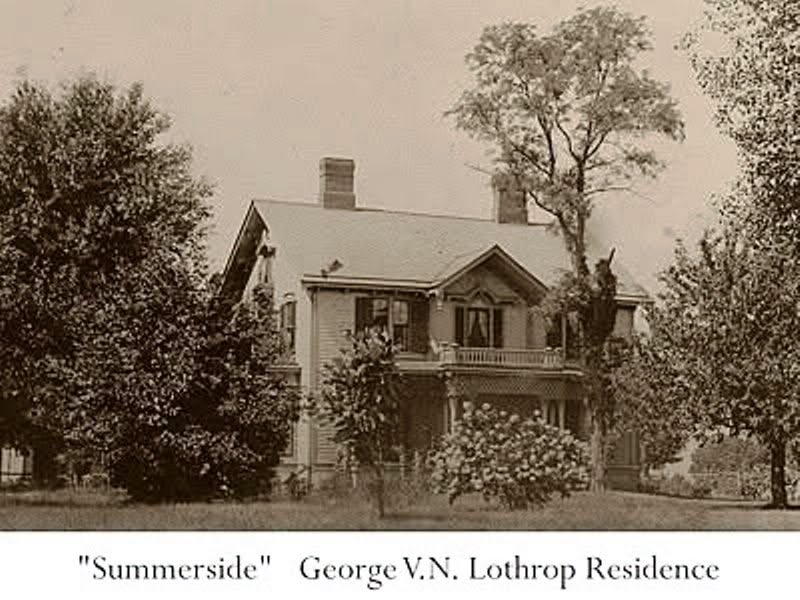
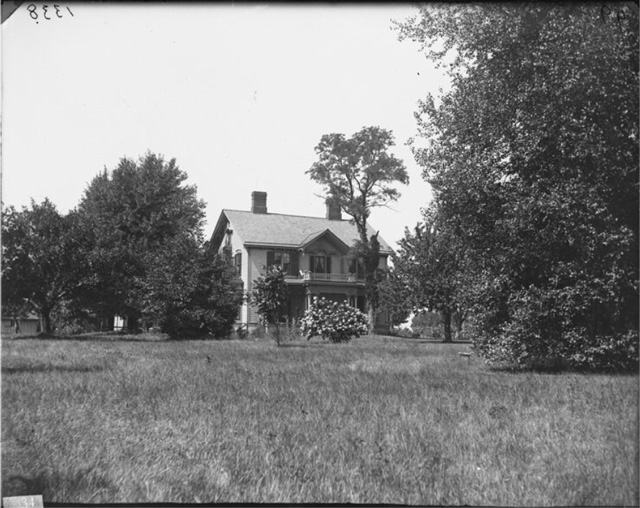
A further extract in the publication explains “Lothrop’s intimate friend, Edmund A. Brush, had located in Grosse Pointe shortly before him, and for several years, they were the only colonists. Both raised large families and lived in rural simplicity compared with present-day customs. Whether an approach to fashionable life brought increased pleasure to the colonists at the Pointe, the older residents much do question. If a well spent life entitles any man to enjoyment and peace in his later years, it is certainly due to the owner of "Summerside." Source: Grosse Pointe on Lake Sainte Claire, published by Silas Farmer & Co. (1886).
George Lothrop passed on July 12, 1897, in Detroit. His stunning residence “Summerside” was then owned and occupied by James Moran. It is not known when the property was demolished. Today, a Michigan historical marker is located on Charlevoix Avenue, which commemorates a stand of pine trees that Mr. Lothrop planted on the site in 1878. It is reported “these trees became the "feeder stock" for many of the pine groves that are now widespread in the eastern suburbs of Detroit. Across from the pine plantation is Lothrop Road, named in his honor.”
Theodore Parsons Hall was a key figure in the development of Grosse Pointe. With limited and somewhat conflicting details, it appears he purchased “Grants Castle” around 1875, when fifty acres of the farm, belonging to Commodore Grants family (Grant passed on 8 May 1813), was purchased by Hall from one of Grants descendants - presumably Grants last surviving daughter Jane, who died in April 1875. Following Mr. Halls purchase it is understood the “castle” was razed and the land subdivided. It is reported Mr. Hall used an old walnut staircase, mantelpiece and doors from the original structure for his new residence called "Tonnancour" Source: Heritage Magazine (February 1986).
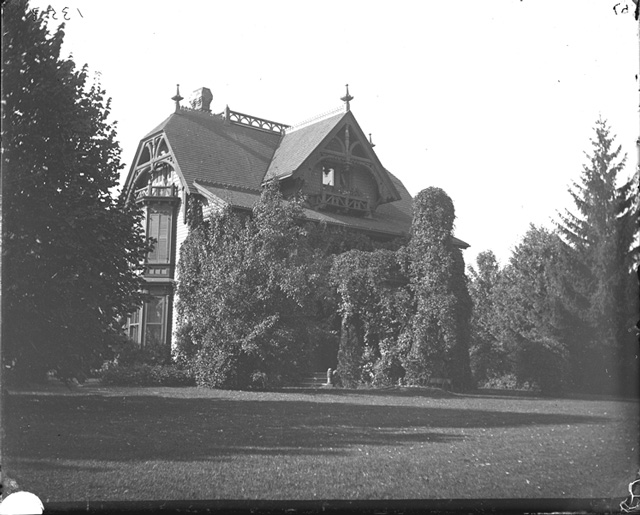
Tonnancour was built in 1880. The property consisted of sixty-three acres which ran 2 ½ miles inland from Lake St. Clair. About fifteen acres were devoted to lawn and garden, twenty-five to pasture, and the remainder to natural forest. Theodore Hall set about building an elaborate estate called “Tonnancour”. This included an elegant summer residence – a wooden Victorian Swiss Chalet style mansion and a boat house – both of which were designed by influential Detroit architect Mortimer L. Smith. Images courtesy of Detroit Public Library and GP Historical Society.
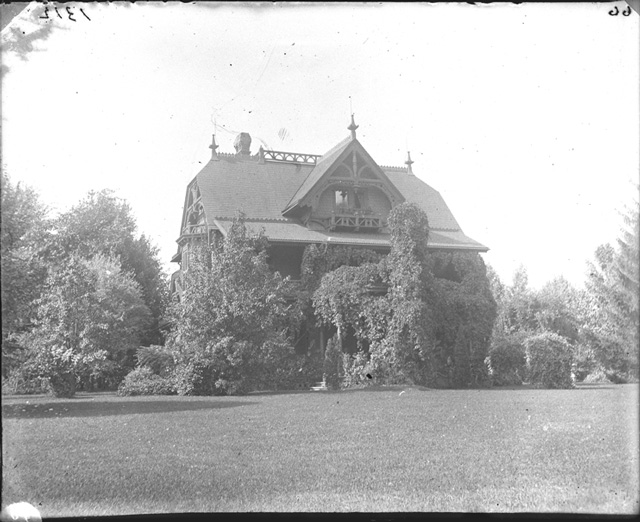
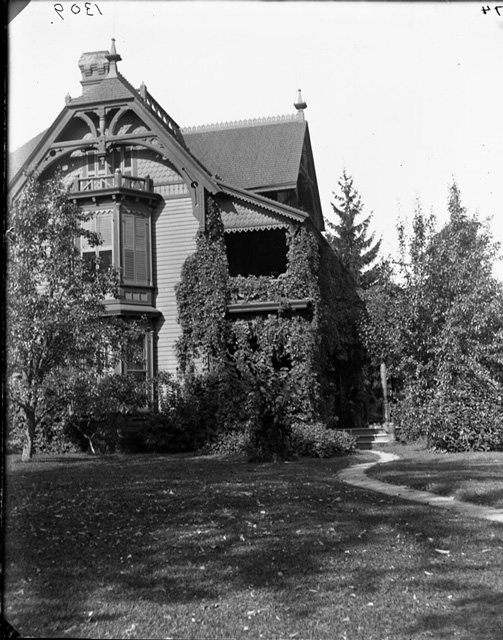
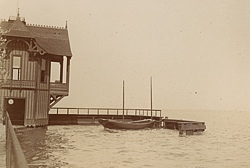
The publication Grosse Pointe on Lake Sainte Claire, published by Silas Farmer & Co. (1886) explains “the very old orchard on the ridge back of the house contained trees dating back to 1815. In the front portion many select varieties of ornamental trees were planted, a willow of enormous size stood just above the house and near the road. On the lake side was a spacious boathouse built in Swiss style of architecture. A fine beach was rescued from the lake, and on it stood a rustic grotto enshrining a statue of Notre Dame deSainte Claire, commemorating an old tradition described in the "Legends of Detroit." It is understood “the family spent subsequent summers developing the estate and each year dancing parties, theatricals and other evening amusements took place. During the winter months, the Hall family resided in Detroit sometimes at the Hotel Cadillac or at their home on Jefferson Avenue.” As the years went by it is acknowledged the family spent winters in Florida or on the Pacific coast. Source: Thomas W. Brunk.
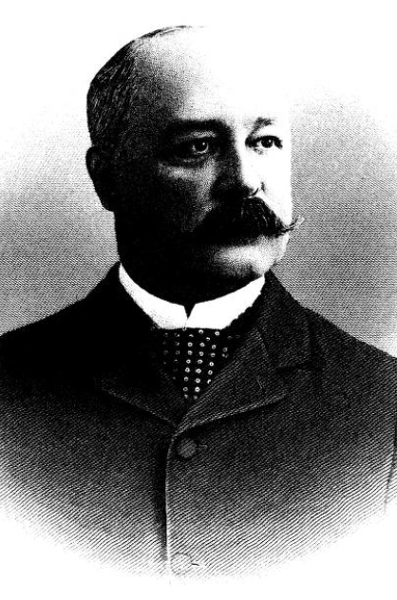
Theodore Parsons Hall was a commodities broker and grain merchant. He was born in Connecticut on 15 December 1835. He graduated from Yale in 1856, and came to Detroit from Wall Street, New York, to work as a cashier at the old State Bank of Michigan. He married, Alexandrine Louise Godfory in 1860. Ms. Godfroy was daughter of Pierre Godfroy, and granddaughter of Col. Gabriel Godfroy, whose father was one of the founders of Detroit. Image courtesy of: Findagrave.com.
On 3 January 1909, Theodore Parsons Hall passed away, survived by his wife, Alexandrine, and three children. Around five years later their beautiful Victorian home burned down. Following the fire Alexandrine moved to a residence in Detroit while her new home, 383 Lakeshore was completed. During this time the Hall estate was sub divided. A section of the land became part of the Country Club’s golf course, while each of Hall’s three children (Josephine, Nathalie and Marie) built homes on the lake front sections of the property. Source: Thomas W. Brunk, courtesy of the Grosse Pointe Historical Society.
George Lothrop and Theadore Hall were two key figures in the history and growth of Grosse Pointe. Without them the community we know today might have been quite different.
* Photos courtesy of the Higbie Maxon Agney archives unless stated.
** Research, information, and data sources are deemed reliable, but accuracy cannot be fully guaranteed.
Written by Katie Doelle
Copyright © 2026 Higbie Maxon Agney & Katie Doelle
Enjoy this blog post? Click here to subscribe for updates
Leave A Comment