
Last week we stopped by 315 Fisher, constructed around 1913 for a German florist named Fred Pautke - there are conflicting stories as to what it was initially used for. Since 1981, it has been the home of Grosse Pointe Theatre for rehearsals, workshops, and as its admin office.
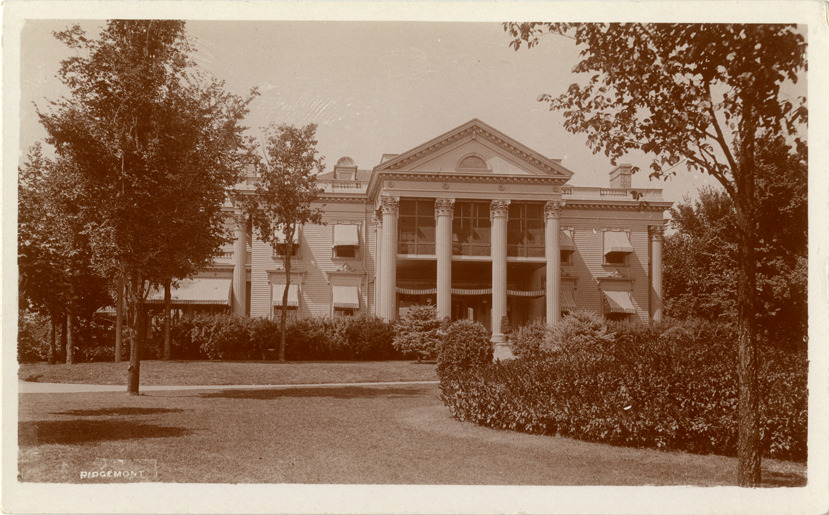
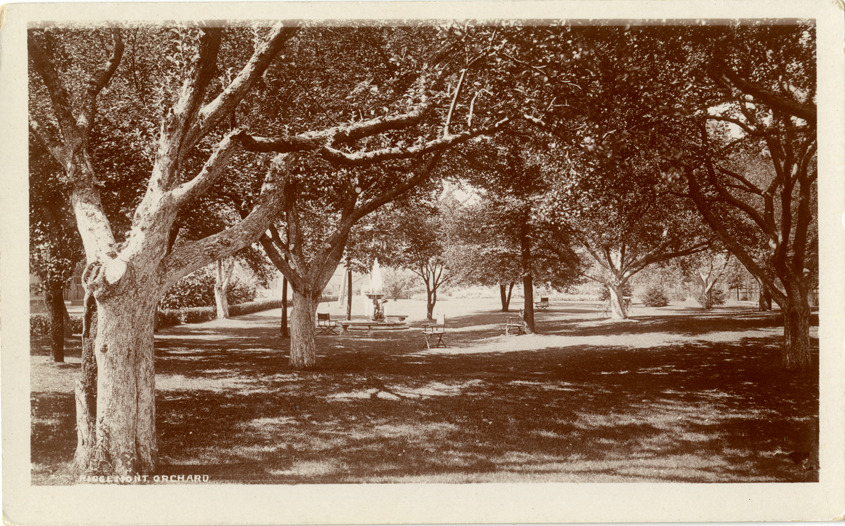
As part of the blog post last week we mentioned the David C. Whitney estate where Fred Pautke (who owned 315 Fisher) was the gardener. This week we delve deeper into this once grand home, known as “Ridgemont” that was located at 237 Lake Shore. It was razed in 1955.
237 Lake Shore was designed by Rogers & MacFarlane for David C. Whitney. It was completed in 1902. At the time Grosse Pointe Farms was transitioning from a place where wealthy families would spend the summer next to the lake to a year-round residential community. Most of the summer cottages that once graced Lake Shore were demolished to make way for the large mansions with formal landscaped gardens. Noted architects were given carte blanche to design grand homes, money was no object and decoration was essential. Each year brought more beautiful homes to the area. In 1902 architect Walter MacFarlane got his chance when banker, and real estate developer David C. Whitney II (son of David Whitney Jr, owner of the house on Woodward, now known as The Whitney) commissioned “Ridgemont”.
Walter MacFarlane, born in Cold Spring, New York in 1859, attended Detroit Public Schools and then returned to New York as a student at West Point. While he was not a college–trained in architecture, he began his architectural career after he landed a job in the architect’s office of Mr. Lloyd in Detroit. By 1885 he had co-founded a firm with James S. Rogers. The firm of Rogers and McFarlane would maintain offices in the city for almost thirty years. The majority of their commissions were in Detroit and southern Michigan and between them they were responsible for the design of many office buildings, banks, and factories in the downtown area including the Morgan & Wright Bicycle Tire Company plant (laterUniroyal) theCadillac Motor Works, the Murphy Power Plant on Congress Street (purchased byDetroit Edison in 1914)along with a number of beautiful residential buildings in and around the local community. In 1910 it was reported Walter MacFarlane left the firm following a nervous breakdown. After recuperating in Colorado and Arizona, he returned to Detroit in 1912 and formed a partnership with Walter Maul and Walter Lenz. Source: Wikipedia.
One of Rogers and McFarlane’s residential projects was the majestic home for David C. Whitney, a beautiful mansion created in a classical Georgian style featuring, columns, pilasters and a central triangular pediment above the entrance (extensive alterations were made over the years). It was one of several white clapboard Colonial Revival homes that were being built in Grosse Pointe at that time. Along with the William C. McMillan house (designed by Mason and Rice) it was described as “one of the most formal and stylistically pure of these homes. The formal emphasis of Walter MacFarlane’s creation undoubtedly came from the White House in Washington.” The home featured a two-storied portico (often found in the South), which was extremely popular at the turn of the century, while sunrooms were located at either end of the home. Image courtesy of: Detroit Public Library Digital Collections.
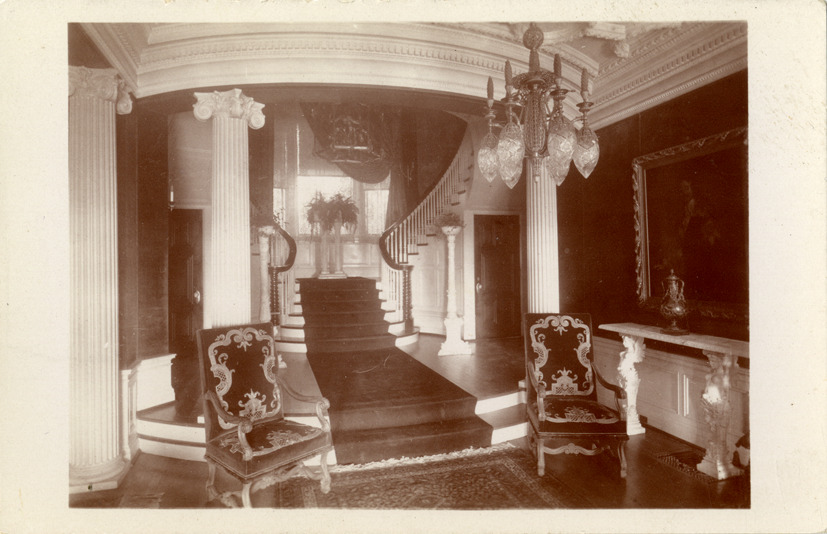
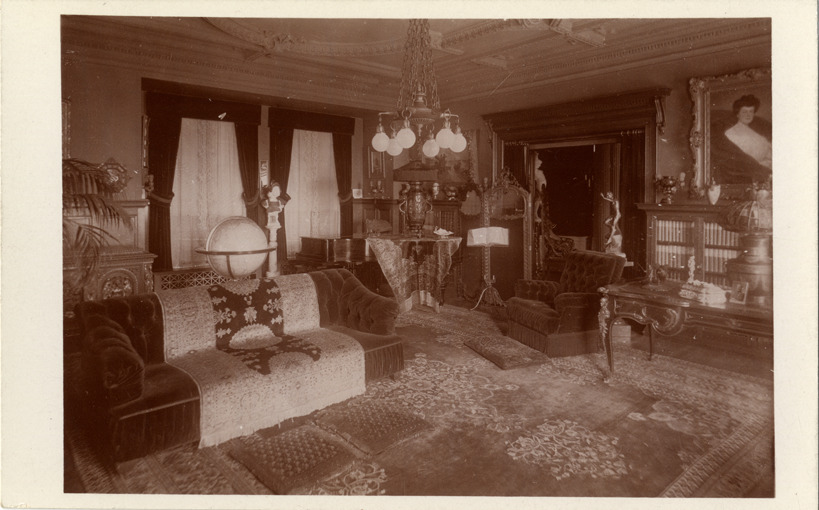
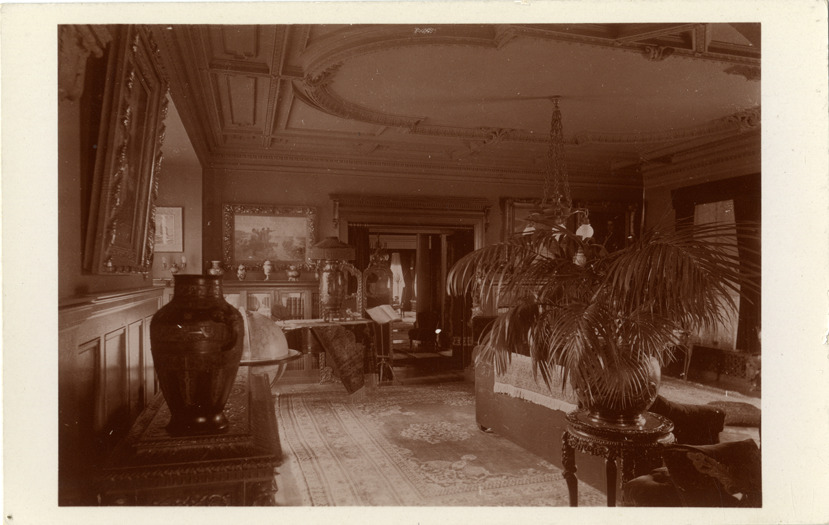
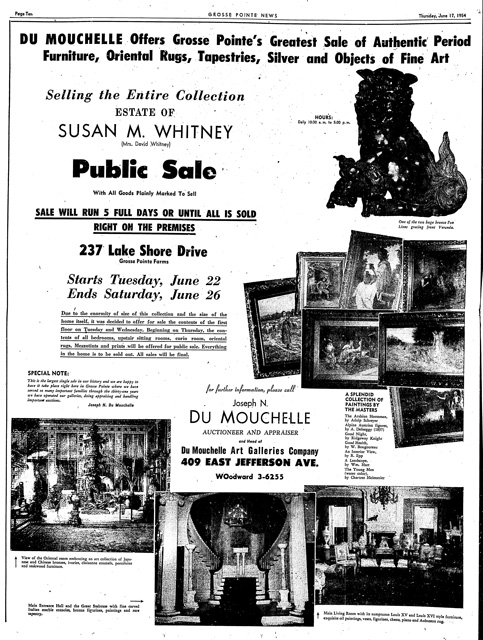
Inside, the house was filled with beautiful works of art, furniture and fittings. It was acknowledged “the Whitney’s soft spot for treasures of the Orient was evident in the famous Oriental room, which featured teakwood tables, bronze Buddha’s, temple bells, ivories, and Chinese miniature art objects. The main entrance hall and the great staircase had fine carved Italian marble consoles, bronze figurines, paintings, and rare tapestries. In the living room was Louis XV and Louis XVI style furniture, beautiful oil paintings, vases, figurines, chests, and a piano. Throughout the house was a “splendid collection of paintings by the Masters.” Source: Grosse Pointe News (June 1954). And thanks to her love of French decor Susan Whitney’s bedroom was a replica of Marie Antoinette’s at Versailles.” Source: Tonnancour, Volume 1. Images courtesy of: Detroit Public Library Digital Collections.
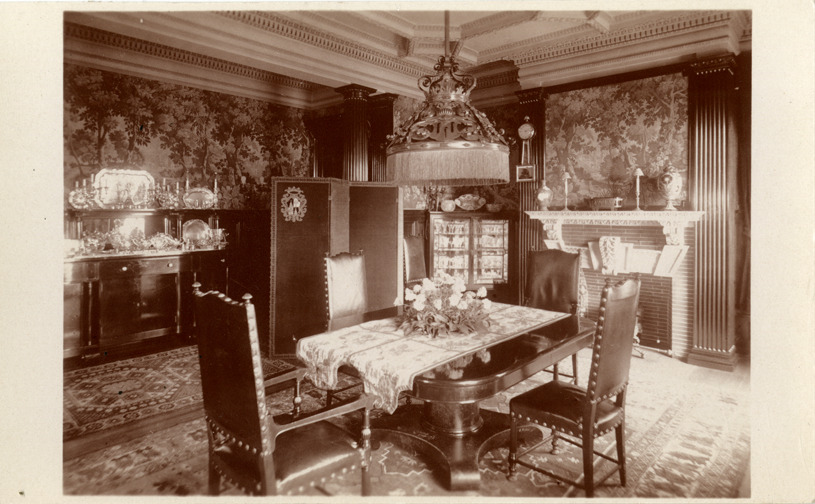
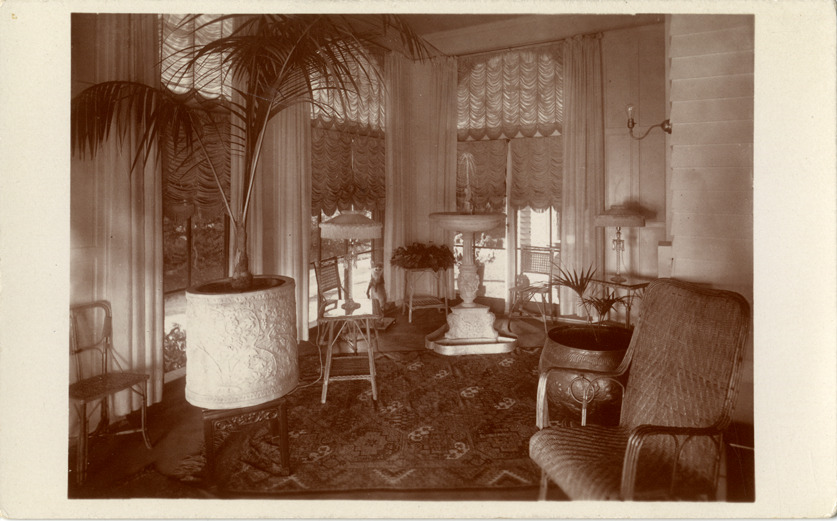
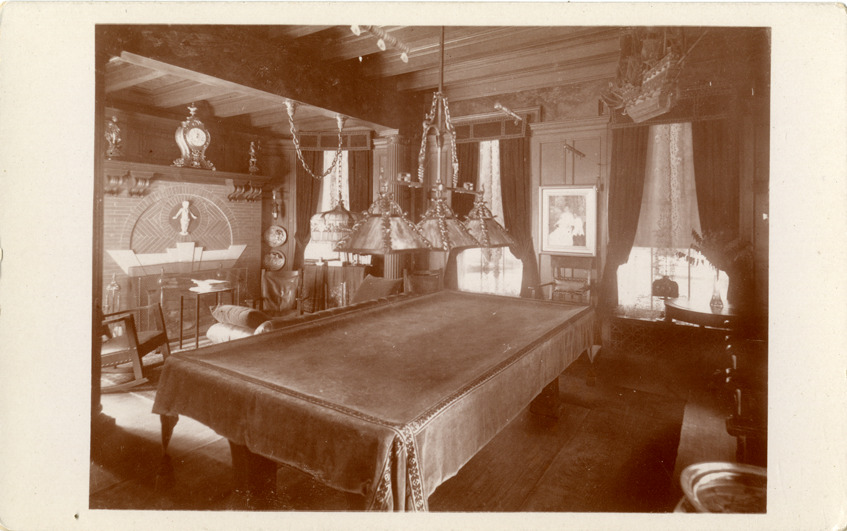
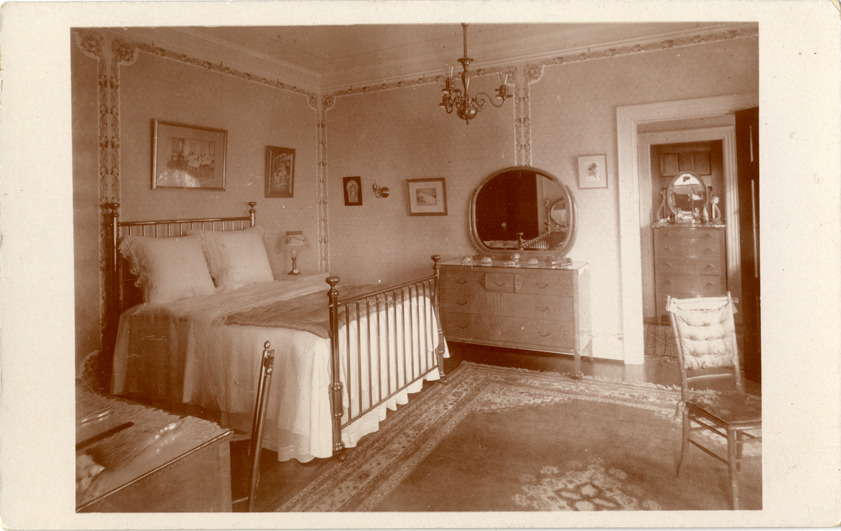
David Charles Whitney II was the son of David Whitney Jr. a prominent lumber baron and one of the wealthiest men in Detroit during the late 19th Century. Mr. Whitney II was born in Detroit on 26 January 1865. He was the head of the Whitney Realty Company and was an avid yachtsman. After moving into 237 Lake Shore in 1902, Mr. Whitney lived at the property with his wife Susan (the couple married in 1892) and their son, until his death on 24 April 1942. It appears his wife remained at the home for several more years. She passed on 19 November 1953. They were the only people who had owned the property.
The David C. Whitney house was one of the earliest mansions to be built on Lake Shore and it was also one of the first to be razed. On 22 June 1954 the property was opened to the public to sell the “entire collection” of the estate. People came from far and wide to attend the sale which ran for five days. It was marketed as “Grosse Pointe's Greatest Sale of Authentic PeriodFurniture, Oriental Rugs, Tapestries, Silver and Objects of- Fine' Art.” Image courtesy of Grosse Pointe News (June 1954) and Tonnancour.
.JPG)
237 Lake Shore was demolished in 1955. Following which the land was subdivided. Part of the property was added to an adjoining estate, 241 Lake Shore, which was owned by Ernest Kanzler (an executive turned banker). In 1966, his son Robert Kanzler commissioned a new home on the site.
If anyone attended the sale or visited the 237 Lake Shore we would love to hear from you.
* Photos courtesy of the Higbie Maxon Agney archives unless stated.
** Research, information, and data sources are deemed reliable, but accuracy cannot be fully guaranteed.
Written by Katie Doelle
Copyright © 2026 Higbie Maxon Agney & Katie Doelle
Enjoy this blog post? Click here to subscribe for updates
Leave A Comment