
Last week we continued with the work of Robert O. Derrick, as we stopped by 97 Touraine. This stunning Georgian style home was completed in 1929, for stockbroker Howard Bennett.
This week we return to Robert O. Derrick’s work on Provencal. We recently covered four homes he created, and now we explore two further properties – 290 Provencal and 274 Provencal. This makes six homes in total on this special road - more than any other architect.
290 Provencal
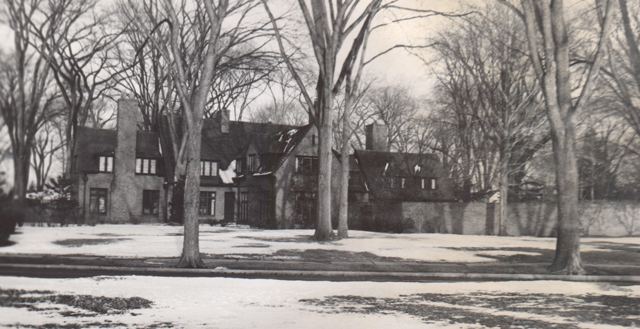
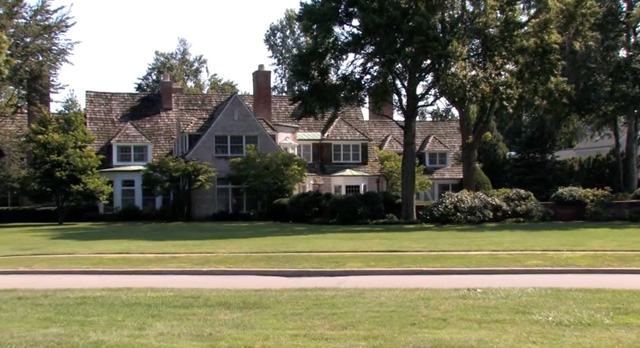
290 Provencal was completed in 1924, by Robert O. Derrick for Hiram H. Walker II, and his wife Elizabeth Stroh. Prior to moving into their new home on Provencal, the couple resided at a gracious home in Indian Village - 1441 Burns - designed by Smith, Hinchman, & Grylls. His grandfather, Hiram Walker, was an American entrepreneur and founder of the Hiram Walker and Sons Ltd. distillery in Windsor, Ontario. It appears Robert O. Derrick was one of the favored architects of the Walker family. Not only did he design 290 Provencal, but he also designed the majestic 211 Vendome, in 1929, for Franklin Caldwell Walker, another of Hiram Walker’s grandsons.
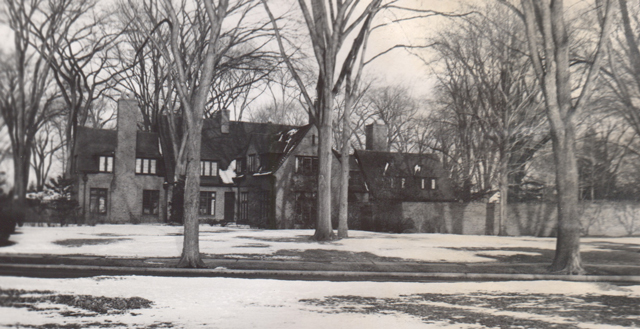
Over the years 290 Provencal has undergone extensive alterations to create what is now a 15,000 sq ft home. In 1980, we understand the main floor of the residence had a 17’ x 33’ sq ft living room; a 28’ x 18’ sq ft dining room; a 40’ x 25’ sq ft games room; a 15’ x 21’ sq ft pool room, along with six fireplaces. Upstairs there were seven bedrooms, three sitting rooms, one kitchenette, along with five further fireplaces. In the spacious basement was a recreation room, bar room, a walk-in safe, wine cellar, along with four storage rooms. Image courtesy of vimeo.com
The garden of this magnificent home was designed by nationally renowned landscape architect Ruth Bramley Dean, one of three gardens she created in Grosse Pointe. It was a beautiful work of art. With the project commencing in 1925, it is reported some of the planting was completed before construction of the house had begun. Originally, the estate comprised of around 4-acres, it is understood, due to the large number of elms and native hawthorns, Ms. Dean adopted a “distinctly naturalistic” approach to the design. Based on an interview in Architecture Forum magazine (October 1929) Ruth Dean spoke of the project as “an ideal operation on which to work - the beauty of the piece of land, a sympathetic client, and a most cooperative architect combined to make it so.”
It is apparent Ruth Dean worked closely with the architect Robert O. Derrick. We understand together they decided upon the location of the house in relation to the garden. It is reported they made a detailed survey of the land and “experimented with a small, scaled model of the house to determine the most desirable building site - a location which would assure privacy from neighboring houses and the most advantageous outlook from the principal rooms.” It was also reported the placement of the house amongst the trees was selected so that they appeared to enfold it. Source and images: Architecture Forum magazine (October 1929).
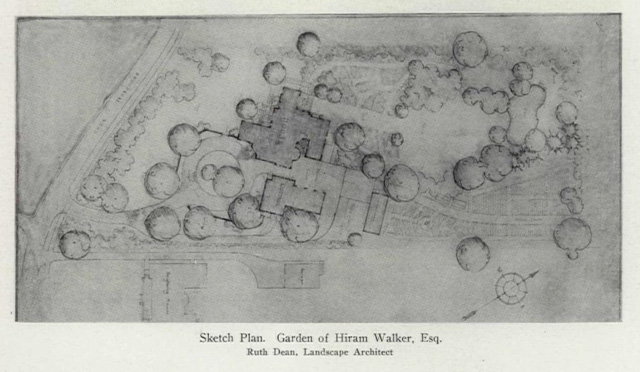
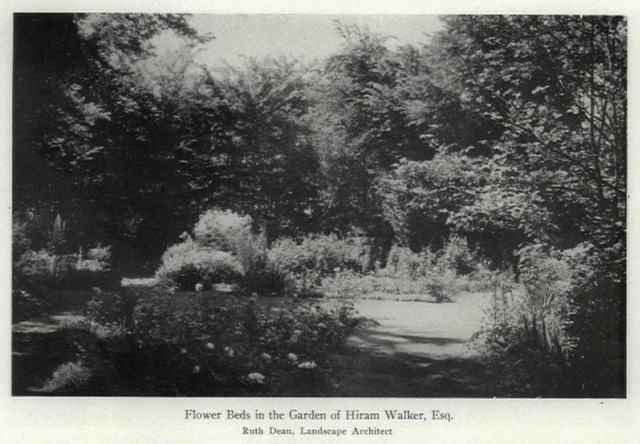

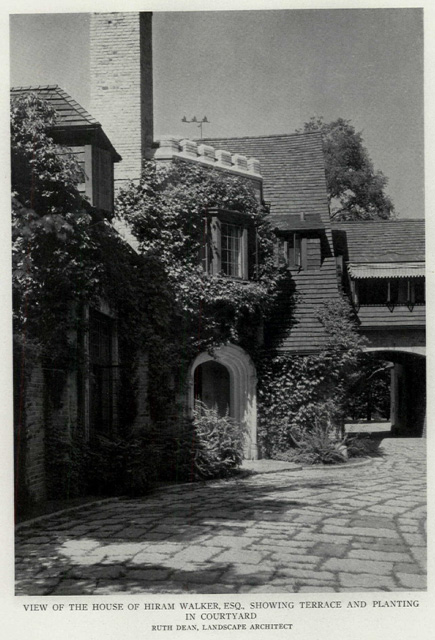
Aside from elms and hawthorns the garden was the location of many other varieties of trees, including black alders, elders, white birches, beeches, sycamores, and oaks. The garden was also home to many perennial flower beds that would bloom throughout the seasons, featuring – tulips, chrysanthemums, asters, wild columbines, and several varieties of native ferns. It was acknowledged, “several large elms were situated on the property, the shadow effects on the lawn were lacy and interesting with the landscape architect having tried to avoid too much solid black in the shadows. Proper placing of trees produced shadows to break a plain stretch of lawn, and that was kept in mind.”
A further detail of the extensive garden was the large, irregularly shaped swimming pool that was set amongst the trees at the rear of the plot. It was acknowledged the concrete rim of the pool was built so that grass could be grown to meet the water line without showing the concrete limestone slabs. Thus, giving the pool a picturesque effect with water spilling over stones from an upper level to give the sense of a natural spring-fed pond, thereby continuing the naturalistic effect, to make it appear “the pool was the work of nature.” The article in Architecture Forum magazine (October 1929) also explained wild prairie roses and grapes were banked behind the pool so that their branches fell naturally over the stones to add to the effectiveness of the setting.
274 Provencal
Also completed in 1924, by Derrick, was 274 Provencal - designed for Alanson S. Brooks. This 13,487sq Ft residence is a Clapboard Colonial style home. Image courtesy of: Detroityes.com
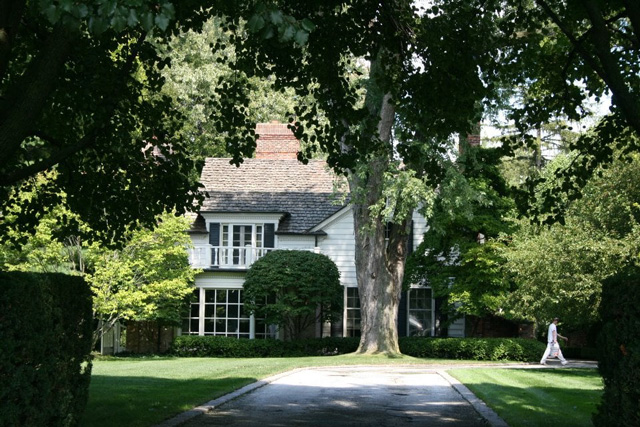
Over the years it has had several high-profile owners – in the 1950’s the property was owned by Henry B. Joy Jr. In May 1956, the garden was part of the Grosse Pointe Garden Tour, an annual event sponsored by the Detroit Garden Center.
By 1994, the property was under the ownership of Mr. Ralph Booth II (who is still the owner). It appears during the 1990’s Mr. Booth added a bath house to the existing carriage house. After 2010, Mr. Booth purchased the adjoining house which substantially increased the size of the lot.
The six homes Robert O. Derrick created on Provencal are all beautiful works of art. As an architect who created more homes on the street than any other, he certainly influenced the look of this prestigious street for years to come.
* Photos courtesy of the Higbie Maxon Agney archives unless stated.
** Research, information, and data sources are deemed reliable, but accuracy cannot be fully guaranteed.
Written by Katie Doelle
Copyright © 2025 Higbie Maxon Agney & Katie Doelle
Posted by Kay Agney on
Enjoy this blog post? Click here to subscribe for updates
Leave A Comment