
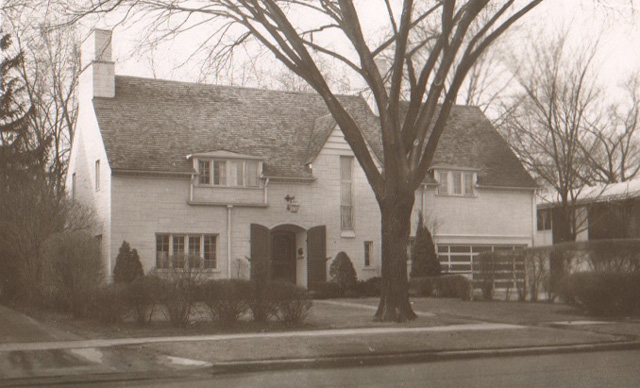
Last week we explored 20 Village Lane, an exquisite home designed by D. Allen Wright in 1927, for Harold B. Tyree, a veteran of World War I and vice president of Detroit Edison.
This week we stay with the work of D. Allen Wright as we begin a two-part presentation featuring many of the homes he designed in Grosse Pointe. It appears he designed close to 30 homes in the community. In part one we are going to focus on his French inspired period: 1926 – 1930.
David Allen Wright was born on July 19, 1886, in Springfield Township, Michigan. During his career he became a noted designer, both locally and nationally. Between 1926 and 1930, many of his creations appear to be large French inspired homes, typically in the Normandy and Provencal style – which provided many fine examples of this architectural approach.French style architecture was extremely popular in Grosse Pointe during the 1920’s through to the 1940’s.
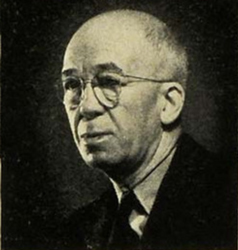
Very little information is available about Wright’s career, but we have been able to piece together a brief introduction to the work of this versatile designer. Early on it appears Wright worked for the renowned architect Alvin E. Harley. During World War I, he stepped away from his career to serve overseas for 17 months with the 107th Engineers, 32nd Division. On his return to the United States, he took up his old position at Harley’s firm, however it’s not clear how long he continued to work for Harley before he set up his own practice. Over the course of his career Wright’s influence and architectural approach changed significantly – evident in the homes he created in Grosse Pointe - designed over a 14-year period.
For the French inspired work he created in the area, it primarily fell into two categories – Normandy and Provencal styles. It has been suggested; the French Normandy country house was the primary inspiration for the American Normandy style. This architectural approach began to become popular shortly after the First World War when French chateaus were a model of inspiration. Typical traits of this style include a steeply pitched roof, sometimes with a round stone tower with a conical top, a stone façade, an arched opening to the main entrance, tall narrow chimneys, along with an asymmetrical configuration to the home.
The French Provencal style is slightly less imposing. The key features tend to be symmetry and balance. Many of the exteriors are stone and feature long windows on the first floor, a steeply pitched roof, and tall slender chimney’s. Many of the doors and windows are arched and adorned by shutters.
Wright’s homes provide us with an excellent example of French architecture. Some of his work in this approach includes –
79 Kenwood – 1926
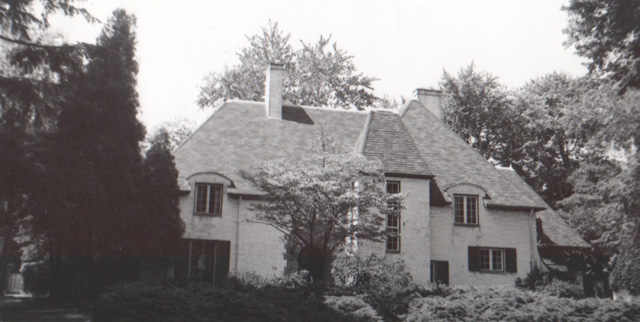
166 Ridge – 1927

29 Roslyn – 1928
93 Cloverly – 1927
87 Cloverly– 1928
104 Kenwood – 1928

65 Moran – 1929

114 Lewiston - 1929
The 8,820 sq ft house is one of Wright’s larger homes. As with many of the French Provencal style homes found in the community, the triangular shaped roof is steeply pitched, shutters adorn the windows, and there are at least two tall, narrow chimneys.
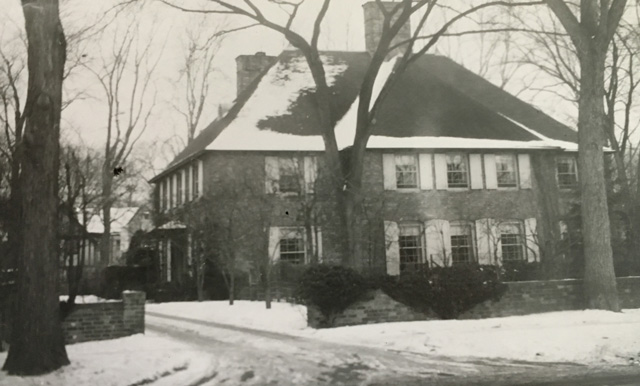
Aside from the French inspired single family homes Wright created between 1926 and 1930, he also designed a series of terraced houses on or near Rivard.
Two of Wrights terrace projects were completed in 1926. The first set were English inspired terraces located on the corner of Rivard and Maumee – see first two images below (courtesy of: Detroit Free Press, August 1926). The second set are located on the corner of Rivard and Charles, while a third set is located between Jefferson and Maumee. Third image courtesy of: Detroit Free Press, July 1926).


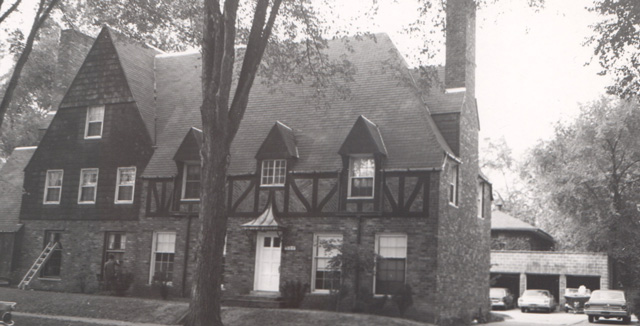
1928 saw the construction of Wright’s fourth set of terraces, located on the corner of Maumee and Notre Dame. They have instantly recognizable Tudor characteristics - the brick exterior incorporates a distinctive timbered section. The units vary considerably in size, from around 3,000 sq ft, to a unit that is closer to 1,791 sq ft.
Also, in the late 1920’s Wright designed:
15200 Windmill Pointe Drive – 1927
706 Balfour - 1927
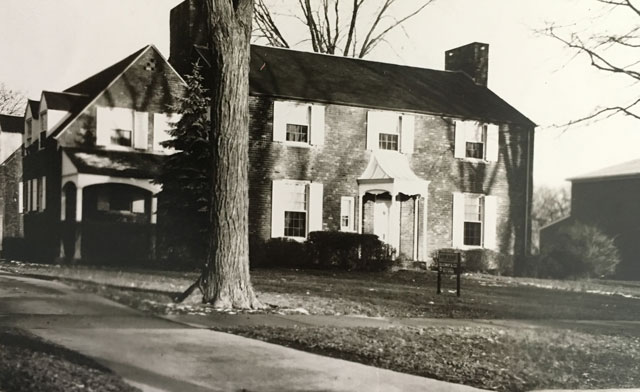
102 Touraine - Grosse Pointe Farms – 1928
94 Touraine - Grosse Pointe Farms – 1928

20 Village Lane - 1929
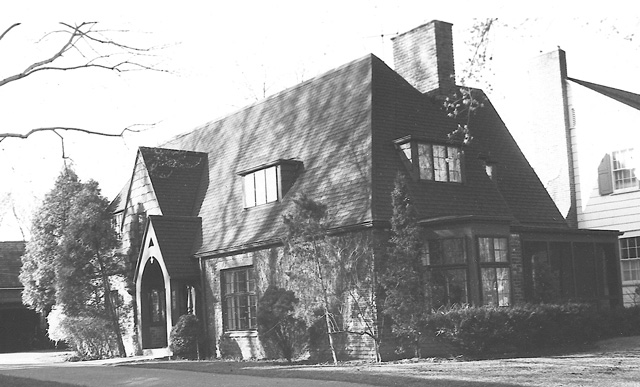
Next week we continue the story of David Allen wright with the projects he completed after 1930.
* Photos courtesy of the Higbie Maxon Agney archives unless stated.
** Research, information, and data sources are deemed reliable, but accuracy cannot be fully guaranteed.
Written by Katie Doelle
Copyright © 2026 Higbie Maxon Agney & Katie Doelle
Posted by Kay Agney onEnjoy this blog post? Click here to subscribe for updates
Leave A Comment