
Last week we concluded our presentation on D. Allen Wright as we explored what is arguably his most prominent creation in Grosse Pointe, 166 Ridge Road - a stunning French inspired property he completed in 1927, for Charles F. Lambert, president of the Clayton & Lambert Manufacturing Company.
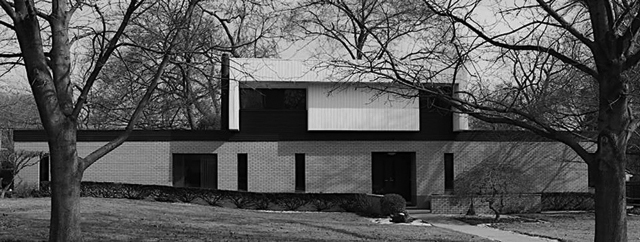
This week we head to 920 Whittier in Grosse Pointe Park, a fine example of an International style home, designed by renowned commercial architect Gaston John Stevens for himself in 1967.
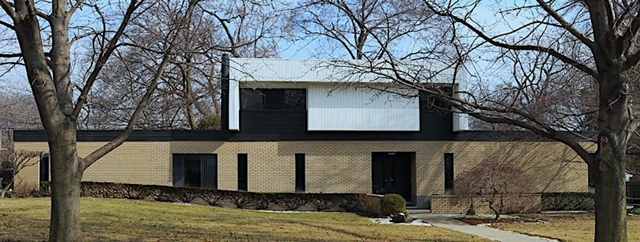
920 Whittier was the subject of our recent free lecture at the Central Library in January. Current owner Dick Ruzzin gave a fascinating presentation about the house and how the International style played a big part in influencing its design. The following article expands on some of the details shared by Mr. Ruzzin about his home and provides further information about the International style movement.
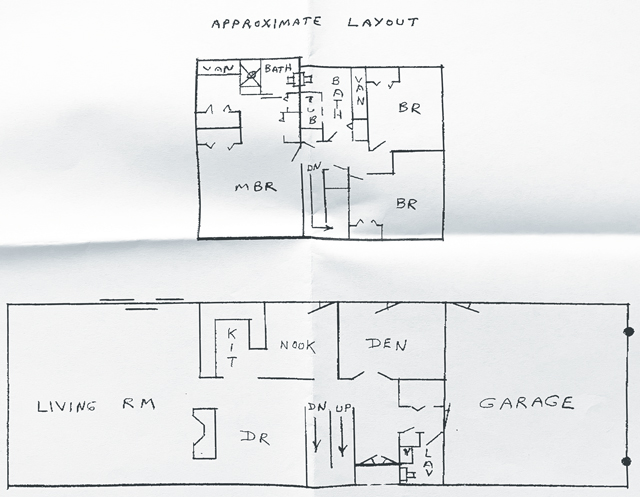
In designing 920 Whittier, architect G. John Stevens focused on creating an energy efficient property for himself, while incorporating design principles from the International movement into various elements of the house. The residence is situated on a large lot with multiple trees including several apple trees - Mr. Ruzzin said the lot was originally part of the grounds of a neighboring home. The 2,222 sq ft house is constructed from brick that was originally painted white and has a hot tar roof. The main floor includes a large 25’ x 22’ ft living room, a 10’ x 9’ ft dining room, a 9’ x 9’ kitchen along with a breakfast nook, and a 12’ x 9’ ft library. Upstairs there are three bedrooms all similar size. The living room has a free-standing fireplace with stucco and glazed red tile, while there is an open skylight above the stairs. Images courtesy of: Katie Doelle.
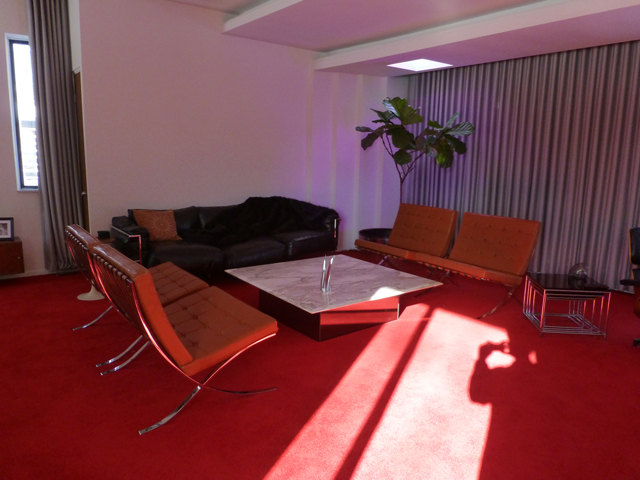
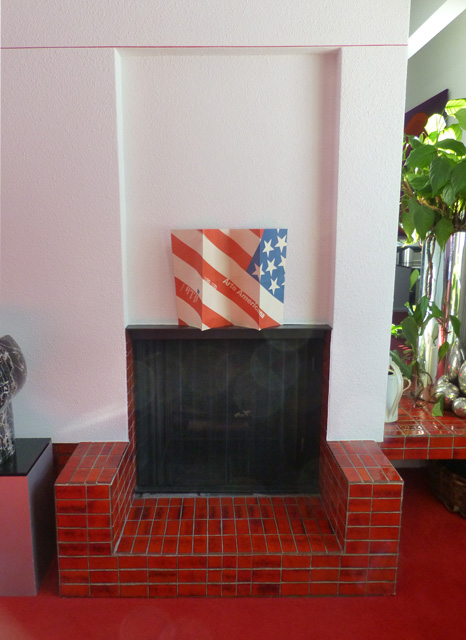
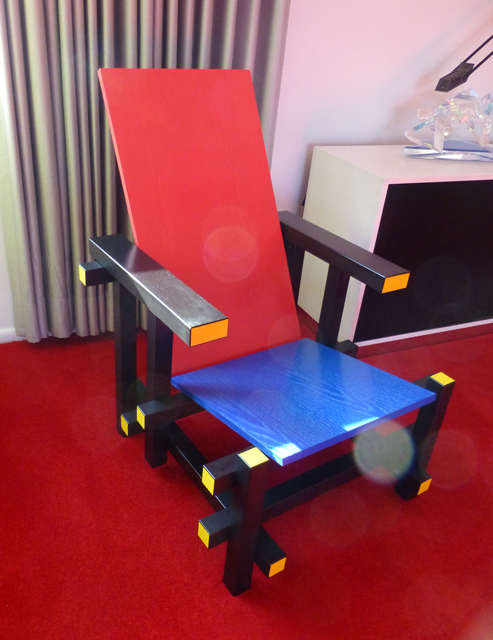
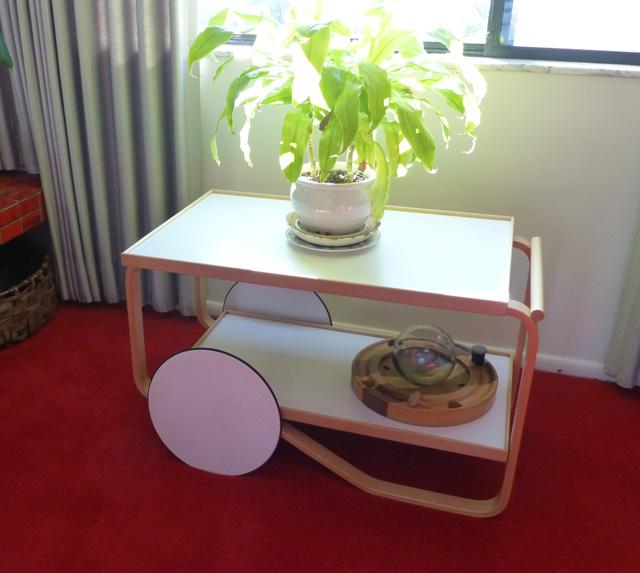
On 3 March 1981, John Stevens reluctantly listed the house for sale for $175,000 (around $624,000 today). At the time he was building a new home for himself at 3 Elmsleigh. After 920 Whittier had been on the market for 9 months the price was reduced to $148,000 and was eventually purchased for $134,000 in December 1981, by Dick Ruzzin who has lived there ever since. Mr. Ruzzin, a renowned designed with GM, has dedicated his time to turning the home into a “masterpiece” which has evolved into a 50-year project. Much of the furniture in the house was purchased by Mr. Ruzzin in New York, from the Museum of Modern Art. The dining room and the living room have been created to reflect the International style and include several recognized pieces of furniture such as the Eames chair, the Rietveld chair, and the Artek Aalto Tea Trolley. Other pieces of furniture were purchased locally, while Mr. Ruzzin made some of the pieces himself. Images courtesy of: Katie Doelle.
Aside from the Whittier house, there are several wonderful examples of International style homes in Grosse Pointe. The International style is an important design movement that began in 1923. It influenced many aspects of life during the 1920’s and 1930’s, influencing creations of all kinds such as fashion, industrial design, graphic design, products, automobiles, fine art, household objects, furniture, and architecture.
During the 1920’s the International style grew in popularity in Europe, thanks in part to the growing influence of the Bauhaus in Germany. It began to gather pace in the US at the beginning of the 1930’s, with many US cities on the east coast utilizing the change in building materials to build commercial buildings, including skyscrapers, led by pioneering architects in this era such as Philip Johnson. At the same time groundbreaking residential projects were being created by Frank Lloyd Wright and Eliel Saarinen to name but a few.
Not only did the movement influence design but also the materials things were made from, relying heavily on the use of steel and glass. The International style brought about a new way of thinking with many designers of the 1920’s and 40’s opting to move away from their tried and trusted “traditional approach” to focus more on the use of geometric shapes, simplicity, light, space, and a heightened use of primary colors - red, yellow and blue. Leading artists and designers of that era chose to embrace the movement including popular artists of that era - Mondrian and Matisse. During the 1940’s world renowned architect and interior designer Mies Van Der Rohe (the last director of the Bauhaus) began to “focus his efforts on enclosing open and adaptable "universal" spaces with clearly arranged structural frameworks, featuring prefabricated steel shapes filled in with large sheets of glass.” Source: Wikipedia. One of Mies Van Der Rohe’s most renowned projects is Lafayette Park in Detroit, often described as the greatest collection of his buildings in one place in the world – learn more here.
Here in Grosse Pointe one such architect influenced by the International style movement was G. John Stevens, when he created 920 Whittier. Born in Belgium on 4 January 1936, Mr. Stevens was educated at Ecole D’ Archicture Superieur in Brussels in 1952 – 55. Mr. Stevens then continued his studies in at the University of Toronto (1955 – 60). One year after graduation Stevens was invited to continue his design studies in Switzerland with world renowned architect Professor Jean Tschumi. During this time, he won an international architectural design competition. Upon completion of his projects in Switzerland Stevens returned to Canada where he worked for architectural firms and was a part time instructor at the University of Toronto and the Central Technical School in Toronto. Prior to moving to the United States Stevens was commissioned to design a new church for Our Lady of Sorrows Parish in Detroit. Following his move to Detroit he was hired as an architect at the firm of Eberle M. Smith Associates, Architects and Engineers. Source and image: Michigan Society of Architects Magazine (April 1967).
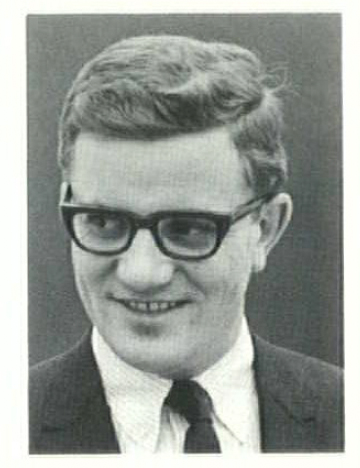
In April 1967, Mr. Stevens started his own practice, John Stevens Associates, Architects, Engineers & Planners. It was an accomplished firm that not only were hired, during the later part of the twentieth century, to design numerous commercial buildings, but also to make renovations to many existing downtown Detroit properties. The design of the Johnson Recreation Center (completed in 1977) won an honor award from the Detroit Chapter of the American Institute of Architects (AIA) for the firm in 1979. During this period, the company were working on many commercial structures in the city, such as
- Renovations for the Peoples Wayne County Bank Building (also known as the State Savings Bank Building)
- The Center office building on East Jefferson Avenue (1972)
- Renovating the Cadillac Tower lobby and retail storefronts (1985)
It appears 920 Whittier was one of very few residential projects G. John Stevens created, but given the house was for himself it gave him the opportunity to be creative and design something he truly loved.
* Photos courtesy of the Higbie Maxon Agney archives unless stated.
** Research, information, and data sources are deemed reliable, but accuracy cannot be fully guaranteed.
Written by Katie Doelle
Copyright © 2026 HigbieMaxon Agney & Katie Doelle
Posted by Kay Agney onEnjoy this blog post? Click here to subscribe for updates
Leave A Comment